

 raitechcorporation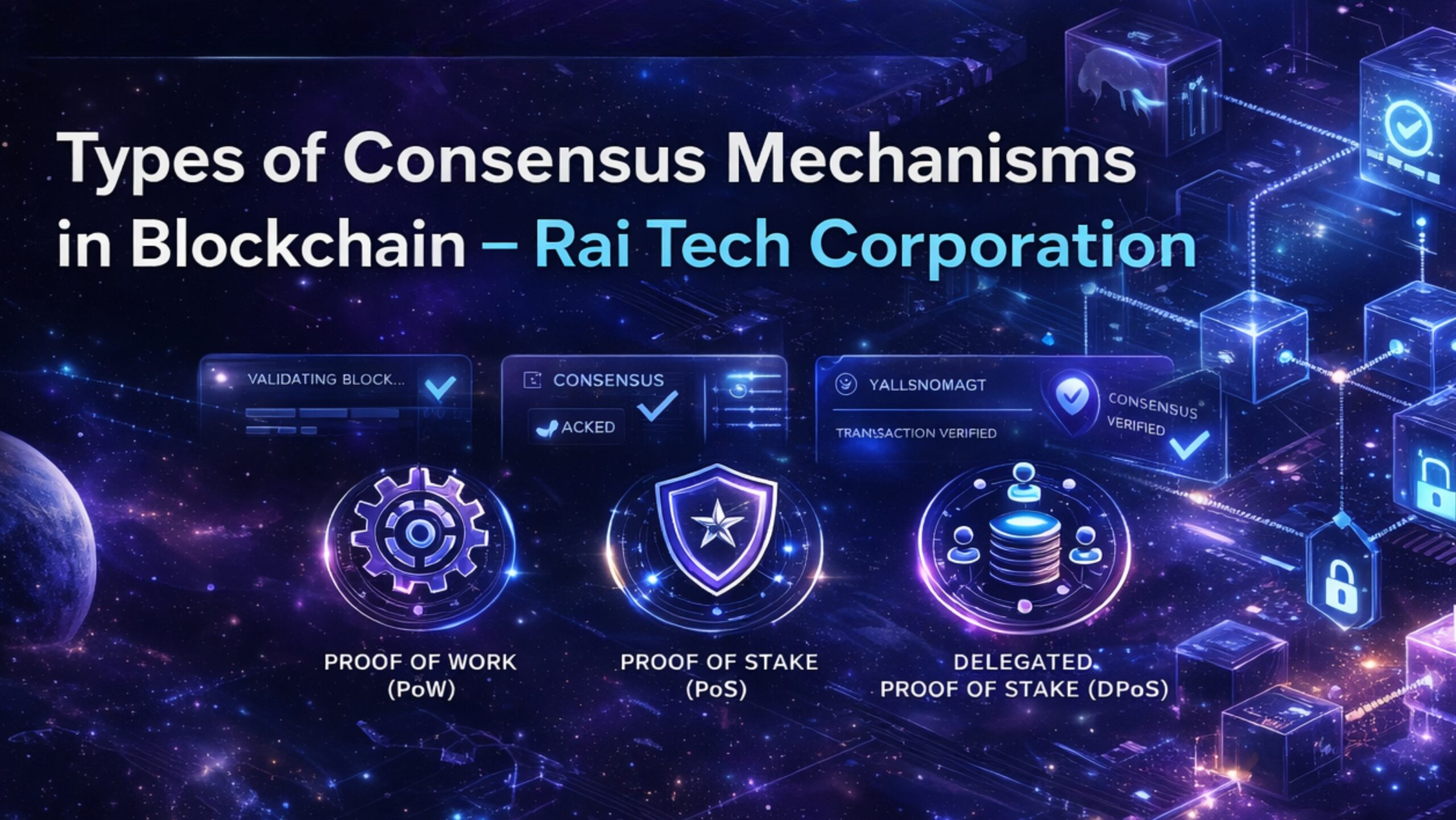
Understanding How Blockchain Networks Work
Blockchain technology relies on consensus mechanisms to validate transactions and maintain network security without a central authority. These mechanisms ensure that all participants in the network agree on the validity of transactions.
Understanding the types of consensus mechanisms is essential for businesses and developers building blockchain-based solutions.
Rai Tech Corporation provides advanced blockchain development services using various consensus algorithms to build secure, scalable, and high-performance platforms.
What Is a Consensus Mechanism?
A consensus mechanism is a process used in blockchain networks to achieve agreement among distributed nodes on the state of the ledger.
It ensures:
- Transaction validation
- Network security
- Decentralization
- Trust without intermediaries
Types of Consensus Mechanisms
There are several consensus algorithms used in blockchain networks. Each has its own advantages and use cases.
1. Proof of Work (PoW)
Proof of Work (PoW) is the first and most widely known consensus mechanism used by blockchain networks like Bitcoin.
Features:
- Requires computational power (mining)
- High security
- Decentralized validation
Pros:
✔ Strong security
✔ Proven reliability
Cons:
❌ High energy consumption
❌ Slower transactions
2. Proof of Stake (PoS)
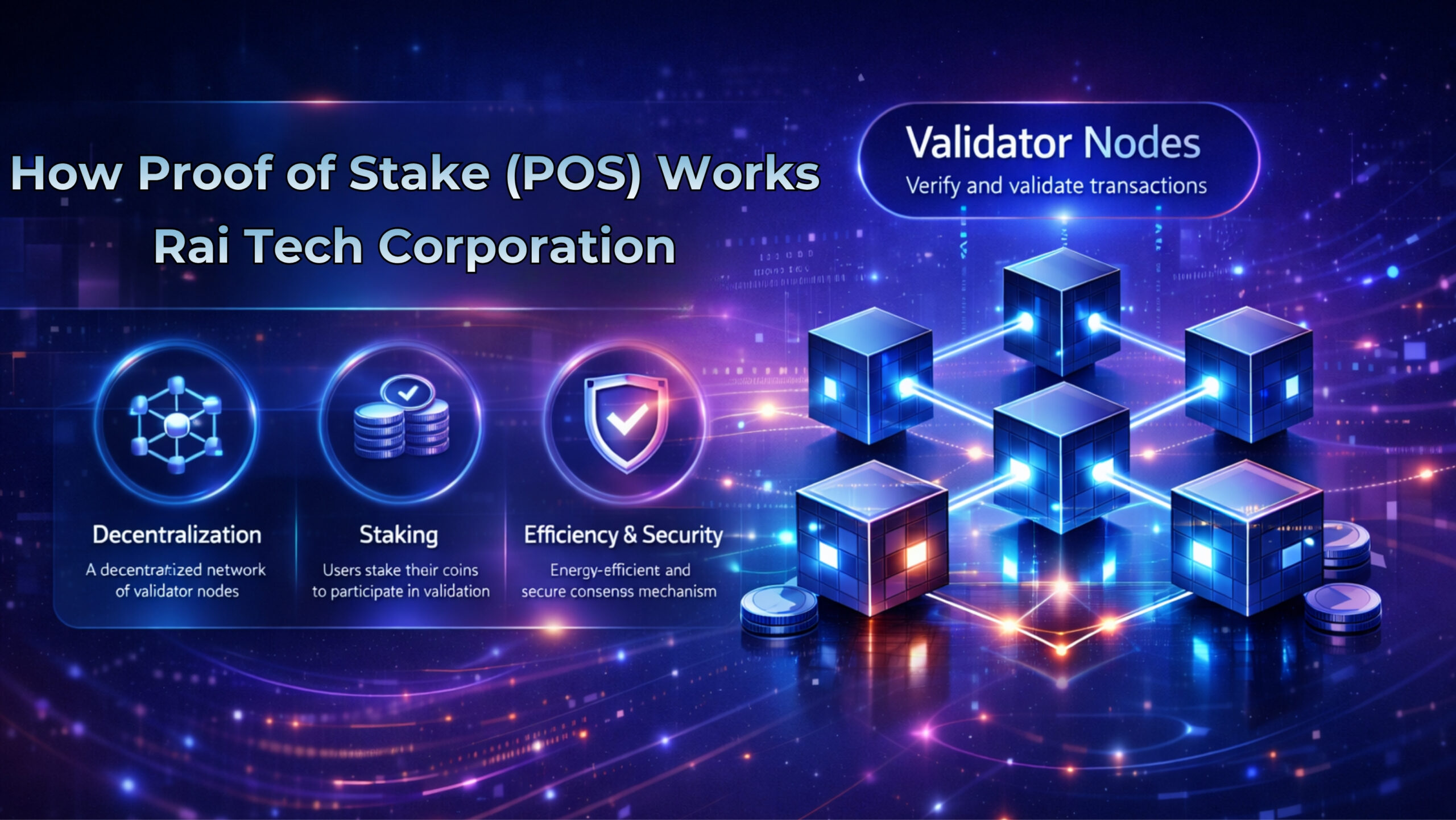
Proof of Stake (PoS) selects validators based on the number of tokens they hold and stake.
Features:
- Energy-efficient
- Faster transactions
- Lower operational cost
Pros:
✔ Scalable
✔ Eco-friendly
Cons:
❌ Risk of centralization
3. Delegated Proof of Stake (DPoS)
Delegated Proof of Stake (DPoS) allows users to vote for delegates who validate transactions.
Features:
- Faster consensus
- Democratic system
Pros:
✔ High speed
✔ Efficient governance
Cons:
❌ Less decentralization
4. Proof of Authority (PoA)
Proof of Authority (PoA) relies on a small number of trusted validators.
Features:
- Identity-based validation
- High efficiency
Pros:
✔ Fast transactions
✔ Low energy usage
Cons:
❌ Centralized structure
5. Proof of History (PoH)
Proof of History (PoH) records timestamps to verify transactions in sequence.
Features:
- High throughput
- Time-based validation
Pros:
✔ Extremely fast
✔ Scalable
Cons:
❌ Limited adoption
6. Proof of Burn (PoB)
Proof of Burn (PoB) requires users to burn tokens to gain mining rights.
Features:
- Reduces supply
- Alternative to mining
Pros:
✔ Energy efficient
✔ Long-term commitment
Cons:
❌ Financial risk
7. Proof of Capacity (PoC)
Proof of Capacity (PoC) uses storage space instead of computational power.
Features:
- Disk-based mining
- Lower energy consumption
Pros:
✔ Cost-effective
✔ Energy efficient
Cons:
❌ Requires large storage
8. Hybrid Consensus Mechanisms
Hybrid models combine multiple consensus algorithms (e.g., PoW + PoS) to improve performance and security.
Benefits:
✔ Balanced security and efficiency
✔ Reduced limitations of single mechanisms
Why Consensus Mechanisms Matter
Consensus mechanisms are the backbone of blockchain systems. They ensure:
- Secure transaction validation
- Trustless system operation
- Network scalability
- Resistance to attacks
Choosing the right consensus model is crucial for building efficient blockchain applications.
Blockchain Development by Rai Tech Corporation
Rai Tech Corporation specializes in implementing advanced consensus mechanisms for blockchain projects.
Our services include:
- Custom blockchain development
- Smart contract development
- DeFi platform development
- Crypto wallet and exchange development
- Layer 2 and scalable blockchain solutions
We help businesses choose the most suitable consensus mechanism based on their project requirements.
Why Choose Rai Tech Corporation?
✔ Expertise in blockchain technologies
✔ Custom consensus-based solutions
✔ Secure and scalable platforms
✔ End-to-end blockchain development
✔ Future-ready architecture
Rai Tech Corporation delivers high-performance blockchain solutions tailored for modern businesses.
Future of Consensus Mechanisms
Blockchain technology is continuously evolving, with new consensus mechanisms being developed to improve scalability, security, and efficiency.
Innovations like Proof of Stake, Layer 2 scaling, and hybrid models are shaping the future of decentralized systems.
Conclusion
Understanding the types of consensus mechanisms is essential for building secure and efficient blockchain platforms. Each mechanism has its own strengths and use cases.
Rai Tech Corporation helps businesses implement the right consensus models to create powerful blockchain solutions.
Contact Rai Tech Corporation
📍 Company: Rai Tech Corporation
🌐 Website: www.raitechcorporation.com
📞 Phone: +91 6394882355
📧 Email: raitechcorporation@gmail.com
Connect with Rai Tech Corporation to build advanced blockchain solutions.